
Every event organizer I’ve talked to every single one — says the same thing after something goes wrong. “I didn’t think we needed that level of security.” And look, I understand. You’re not running a stadium concert. You’re doing a winery dinner or a corporate thing in Niagara-on-the-Lake or a community festival in St. Catharines. Feels like overkill to bring in a full event security team. Until it isn’t.
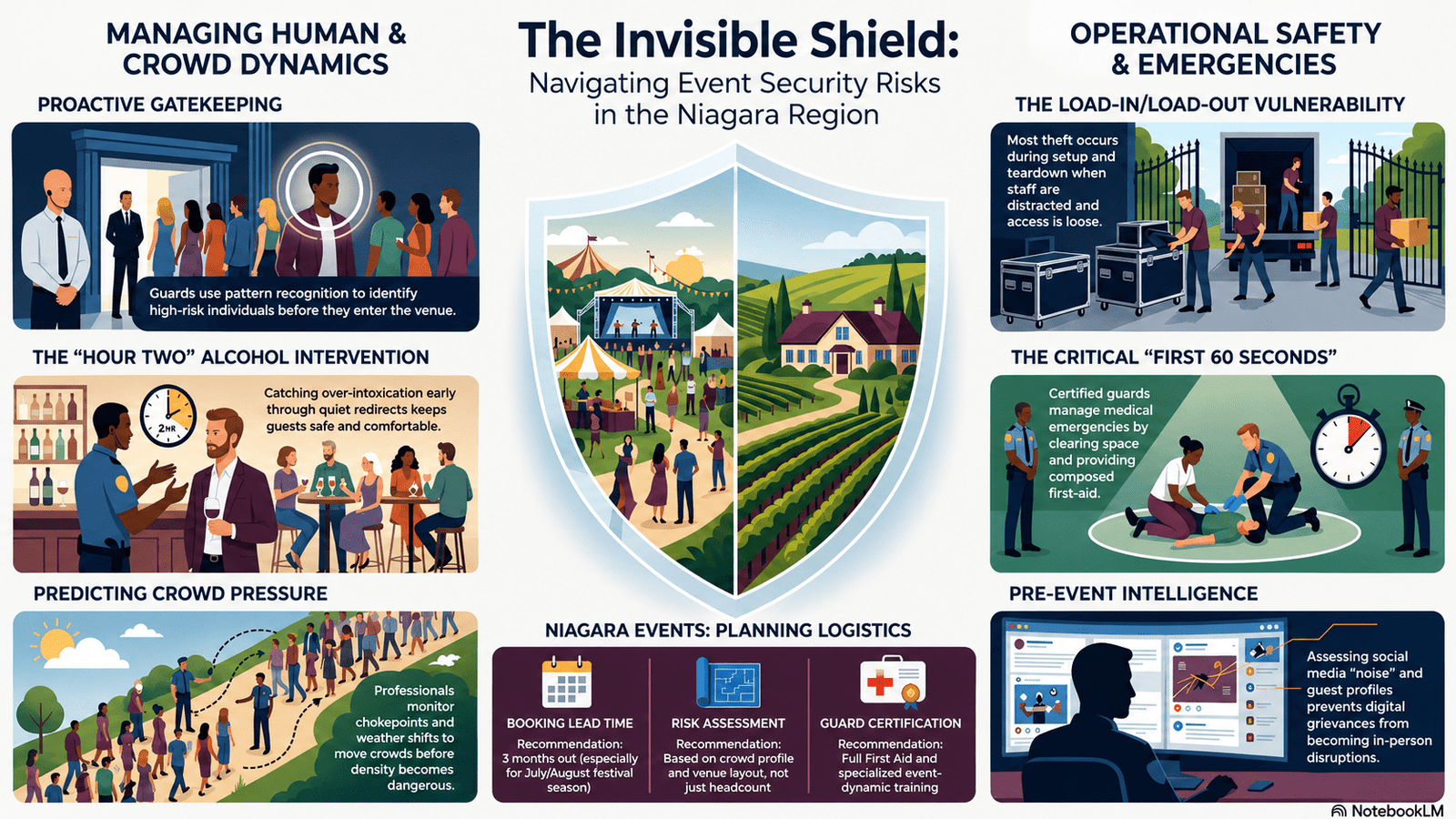
Niagara is a genuinely unique region for this stuff. The mix of events here — the wine country gatherings, the Falls tourism crowd, the summer festival circuit, the corporate retreats — means the risk profile changes dramatically from one event to the next. What works at one venue doesn’t translate. And the problems that show up, they don’t announce themselves in advance.
So here’s an honest look at what actually goes wrong, and what a good event security guard actually does about it.
The Wrong Person Getting Through the Door
Not every gate crasher is harmless. Some of them are. But some of them are an ex-partner of one of your guests, or someone who was removed from that venue six months ago, or someone who’s already been drinking since 3pm and is looking to keep the night going. You don’t know which one you’re dealing with until they’re already inside.
That’s the problem with “we’ll deal with it if something happens.” By then, they’re in.
A trained event security guard working the entry isn’t just checking wristbands. They’re reading the situation. The person with the slightly too-confident walk, the one whose story about being on the guest list doesn’t quite land right, the group that showed up together but something about the dynamic feels off — guards catch that stuff because they’ve seen it before, many times over. It’s pattern recognition built from experience, not a checklist.
Most of the incidents that get prevented never get counted. Nobody writes up the confrontation that didn’t happen because someone was turned away at the door. But it happens constantly.
Crowds Are Unpredictable and That’s the Whole Problem
People think crowd control means stopping a brawl. It doesn’t. Most of the time, crowd control means noticing that the area near the main bar is getting too compressed and doing something about it before the guy in the back starts pushing because he can’t breathe.
Niagara outdoor events have a specific version of this problem. Weather changes fast here — anyone who’s run an event near the Falls or out in wine country knows you can go from fine to “everyone’s rushing for the tent” in about eight minutes. When that happens, you’ve got a crowd moving in a direction and you need someone who knows how to manage that without making it worse.
“Crowd management is about catching the pressure before it builds — not after someone’s already on the ground.”
Event security personnel train for this. They position themselves based on the venue layout, they watch the density around exits and chokepoints, they move people early and calmly before the situation forces the move. It’s not exciting work. It’s effective work. Those are different things.
Alcohol Is Involved in More Incidents Than Anyone Admits
I’ll just say it plainly a huge percentage of the situations we get called into at events trace back to alcohol. Not always a fight. Sometimes it’s someone making guests deeply uncomfortable, or someone who needs medical attention, or someone whose friends are trying to quietly remove them from the situation and can’t manage it on their own.
Niagara wine events carry this risk more than most people want to acknowledge. Open bar, warm summer evening, guests who drove in from Toronto and feel like the rules of their normal life don’t apply here. It’s a specific combination.
What separates a good event security guard from a warm body in a vest is catching this at hour two, not hour four. The person who’s already a little too loud and a little too friendly that’s the one to watch. A quiet word with the bar staff. A gentle redirect. That intervention, done early and without drama, is what keeps it from becoming the story everyone tells about your event.
Theft Is Boring to Talk About and Expensive to Ignore
Big events have a lot of valuable stuff moving around. Equipment, vendor product, cash, personal belongings left at tables, stuff in the coat check. And they have a lot of people, which means a lot of cover for someone who’s looking for an opportunity.
Visible event security services cut theft dramatically, just by being present. People don’t attempt things they think they’ll get caught doing. But beyond the deterrence side, guards actually patrol. They pay attention to who’s lingering in areas they have no reason to be in. They tighten up during load-in and load-out which is genuinely the most vulnerable window, because the team is distracted and access is looser and everyone’s moving fast.
Most organizers never think about load-out specifically. The experienced ones who’ve had something go missing during it they think about it every time after that.
Medical Emergencies Don’t Wait for a Convenient Moment
Someone goes down. Could be heat, could be a reaction, could be a cardiac situation. These things happen at events more often than the industry talks about, and when they happen, the first 60 seconds matter more than everything that comes after.
What makes it worse is bystanders crowding in, someone fumbling with their phone, three people trying to give instructions at once, nobody sure who’s actually in charge. That chaos costs time.
Our guards are first-aid certified and more importantly they don’t freeze. They clear space, they stay with the person, they get EMS on the line and give a coherent update, they keep the crowd back without causing a secondary panic. By the time paramedics arrive, the situation is contained. That composure is genuinely the thing that makes a difference.
Same goes for evacuations. Fire alarm, gas situation, a storm rolling in off the lake guards are the ones who move people out calmly and make sure nobody’s doing something stupid in the rush.
If You Have Someone Notable at Your Event, Plan Accordingly
Corporate galas, political fundraisers, speaker events if there’s a public figure in the room, the security approach has to account for that. Not necessarily a full close-protection setup, but structured access,
controlled arrival and departure, a managed environment around any meet-and-greet situation.
If there’s prior context a known threat, a public disagreement that’s been playing out online, anything that puts a target on someone’s back that gets factored into the plan before the event, not figured out on the night.
Online Noise Sometimes Becomes In-Person Problems
This is newer but it’s real. Events get called out on social media before they happen. Someone with a grievance posts about it, a protest gets organized, a group coordinates a disruption. Or nothing gets organized publicly and someone just shows up because they saw the event announced somewhere and decided they had something to say about it.
A proper pre-event security assessment looks at this. What’s the public profile of the event? Has anything been flagged? Are there known individuals or groups with a reason to show interest for the wrong reasons? A guard walking in with no briefing is working blind, and that’s not a great starting point.
Preparation before the event is genuinely half of what makes event security services work. The night-of stuff is just execution on a plan that already exists.
What Actually Separates Good Event Security From the Alternative
The guards show up having done a site walk. They know the exits, the problem spots, the layout of the venue. They’ve been briefed on the event the crowd profile, any specific concerns, the timeline of the night. They’re talking to each other throughout, not just reacting when someone sprints over to find them.
That’s the standard we hold our teams to at Bullseye Security. Licensed, professional, prepared — whether it’s a 50-person private dinner in Niagara-on-the-Lake or a 2,000-person outdoor festival near the Falls. The event size changes. The approach doesn’t.
Your event represents a lot of work. It deserves security that actually matches that.
Frequently Asked Questions
1.Do smaller Niagara events actually need event security guards?
Honestly, more often than people expect. I’ve seen situations at 80-person private events that would’ve gone completely sideways without a guard on site. The headcount doesn’t determine the risk — the crowd profile does, and the venue, and what’s being served. Worth a conversation at minimum before you decide it’s not needed.
2.How far ahead should I book event security services in Niagara?
As soon as you know the date, honestly. People call us two weeks out expecting availability and we’re already booked — summer in Niagara is genuinely busy, especially July and August. If your event is anywhere near festival season, three months out isn’t overkill. Two weeks out? You’re probably scrambling.
3.Can event security guards handle a medical emergency on-site?
Yes and this comes up more than people think. Our guards are first-aid certified, so if something happens they’re not just standing there waiting for an ambulance. They clear the area, keep people back, stay with the person. The main thing in those moments is someone not panicking, and that’s exactly what trained guards are there for. EMS gets there when they get there. Until then, you want someone who knows what they’re doing.
4.What makes event security different from regular guard work?
Events are dynamic in a way that static site work isn’t. You’ve got a crowd that’s moving and drinking and reacting to things happening on a stage or a dance floor. You need guards who’ve actually worked events not just someone assigned to one for the first time who’s used to watching a parking lot at 2am. The experience is different and it shows.
5.What types of events does Bullseye Security cover in the Niagara Region?
Pretty much everything, honestly. Wineries, outdoor festivals, corporate dinners, private parties, concerts, community events, sporting stuff we’ve done it. The event type matters less than the details around it. A 200-person gala can need more coverage than a 500-person outdoor event depending on the crowd, the venue, the setup. We figure that out when we talk, not from a checklist.