
Event Security Guards in Ontario play an important role in creating a safe and organized environment for any successful event. Planning a successful event involves much more than choosing a venue, arranging entertainment, and managing guests. Safety should be an important part of the planning process from the beginning. Whether you are organizing a corporate gathering, concert, festival, sporting event, wedding, community celebration, or private function, having a professional security plan can help protect guests, manage potential risks, and ensure the event runs smoothly.
Security personnel can support organizers by monitoring entrances, managing crowds, protecting restricted areas, responding to incidents, and helping guests when unexpected situations occur. The right security team should be selected according to the event type, venue, expected attendance, and potential risks.
Why Event Security Should Be Planned Early
Security should not be treated as something to arrange at the last minute. Early planning gives organizers enough time to understand possible risks and determine where security personnel may be required.
A proper assessment can consider entrances and exits, parking areas, crowd movement, restricted locations, emergency routes, guest capacity, and the overall layout of the venue. Planning these details in advance allows security staff to understand their responsibilities before guests arrive.
Professional event security planning can also help organizers coordinate security duties with venue management, event staff, emergency procedures, and other service providers.
Event Security Guards in Ontario: What They Should Bring to Your Event
The quality of security personnel can have a direct impact on how smoothly an event operates. Trained guards should be able to remain alert, communicate professionally, recognize potential problems, and respond calmly when situations change.
Depending on the event, their responsibilities may include access control, crowd monitoring, perimeter observation, guest assistance, protection of valuable equipment, monitoring restricted areas, and supporting emergency procedures.
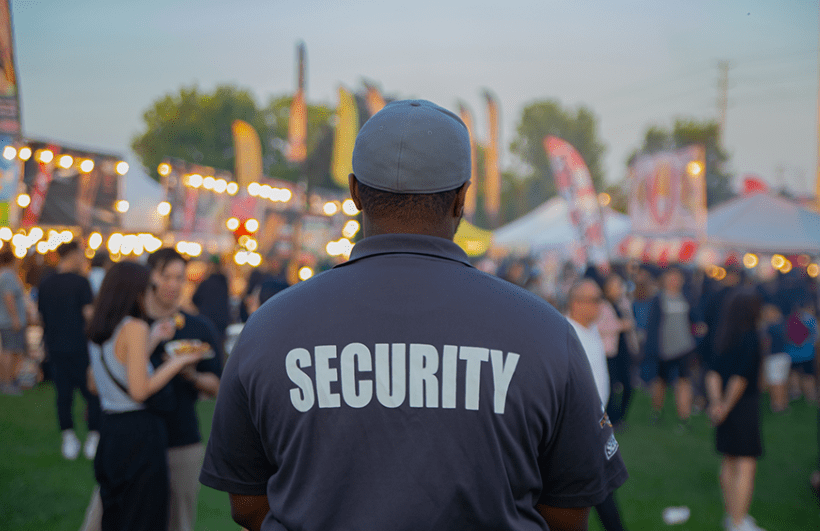
A professional appearance is also important. Uniformed security personnel provide a visible presence that can discourage unwanted behaviour while giving attendees a clear point of contact when they need assistance.
Consider the Type and Size of Your Event
There is no single security plan that works for every event. A small corporate meeting may require a different approach from a large outdoor festival.
Organizers should consider the expected number of guests, venue size, event duration, type of audience, alcohol service, valuable equipment, VIP attendance, and whether the event is indoors or outdoors.
Large gatherings may require multiple security positions, supervisors, entrance coverage, crowd monitoring, and additional support around parking or restricted areas. Smaller events may need fewer personnel but can still benefit from professional security planning.
The goal is not simply to have guards present. It is to place the right personnel in the right locations with clearly defined responsibilities.
Check Licensing, Training, and Professional Standards
Before hiring a security provider, event organizers should ask about licensing, training, insurance, experience, and operating procedures. In Ontario, security work is regulated, so organizers should confirm that personnel meet applicable provincial requirements.
Training is particularly important for event environments because security personnel may interact with large groups of people and changing situations. Skills such as communication, observation, conflict de-escalation, emergency response awareness, and crowd management can be valuable during an event.
It is also worthwhile to ask whether the company provides supervisors and how guards communicate with one another during the event.
Choosing Security Guard Agencies in Ontario
When comparing providers, event organizers should look beyond the lowest quotation. Price is important, but reliability, professionalism, communication, experience, and the ability to develop a suitable security plan are equally important.
A good provider should take time to understand the event rather than offering the same solution to every client. Ask whether the company conducts a site assessment, provides clear instructions to guards, has an escalation process, and maintains communication with event organizers throughout the assignment.
It is also helpful to review the company’s experience with similar events. A provider familiar with festivals may approach a corporate conference differently from a private celebration or sporting event.
Common Security Responsibilities at Events
Event security can cover several areas depending on the needs of the organizer. Common responsibilities may include monitoring entrances and exits, controlling access to restricted areas, managing queues, observing crowd behaviour, protecting equipment, monitoring parking areas, and supporting emergency procedures.
Security personnel can also help identify developing problems before they become serious. Early communication and calm intervention may help prevent unnecessary disruption.
For events involving VIPs, performers, speakers, or sensitive areas, additional access-control measures may also be appropriate.
Communication Is Essential for Event Safety
Strong communication between organizers and security personnel is one of the most important parts of event security. Everyone should understand who is responsible for making decisions and how incidents should be reported.
Before the event begins, organizers should share important information such as emergency exits, restricted areas, schedules, expected attendance, special guests, and venue-specific rules.
During the event, supervisors and security personnel should maintain clear communication so that concerns can be addressed quickly. After the event, incident information and observations can help organizers improve future security planning.
Think About Security Beyond the Main Event
Security needs do not necessarily end when the final guest leaves. The closing period can involve busy exits, vehicle movement, equipment removal, and staff working around the venue.
Organizers should consider whether security coverage is required during setup and teardown as well as during the main event. Monitoring these periods can help protect equipment and maintain an orderly environment until the venue has been cleared.
How to Make the Right Hiring Decision
Before signing an agreement, create a checklist of your event requirements. Consider the venue, attendance, schedule, access points, restricted areas, potential risks, and any special security needs.
Then discuss these requirements with potential providers. Ask clear questions about licensing, training, staffing, supervision, communication, emergency procedures, and experience.
The right security partner should provide a practical solution based on your event rather than simply selling a fixed number of guards.
Final Thoughts
Event security is an important part of responsible event planning. Professional security personnel can help organizers maintain order, protect people and property, control access, and respond appropriately when unexpected situations occur.
By starting the planning process early, understanding the event’s risks, checking professional credentials, and selecting a security provider that understands the venue and audience, organizers can create a safer and more organized experience for guests, staff, and participants.
For any event, the best security strategy is one that is prepared before problems occur and remains professional throughout the entire event.
Frequently Asked Questions
1. Why is professional security important for events?
Professional security helps manage crowds, control access, protect property, and respond to unexpected incidents.
2. What types of events can require security?
Concerts, festivals, corporate functions, weddings, sporting events, conferences, private parties, and community events may require security.
3. How many security guards does an event need?
The number depends on attendance, venue layout, event type, access points, and the level of security risk.
4. What should I check before hiring an event security company?
Check licensing, training, experience, insurance, supervision, communication procedures, and the company’s approach to event planning.
5. Should security cover event setup and teardown?
Yes, depending on the event, security during setup and teardown can help protect equipment, staff, restricted areas, and the venue.